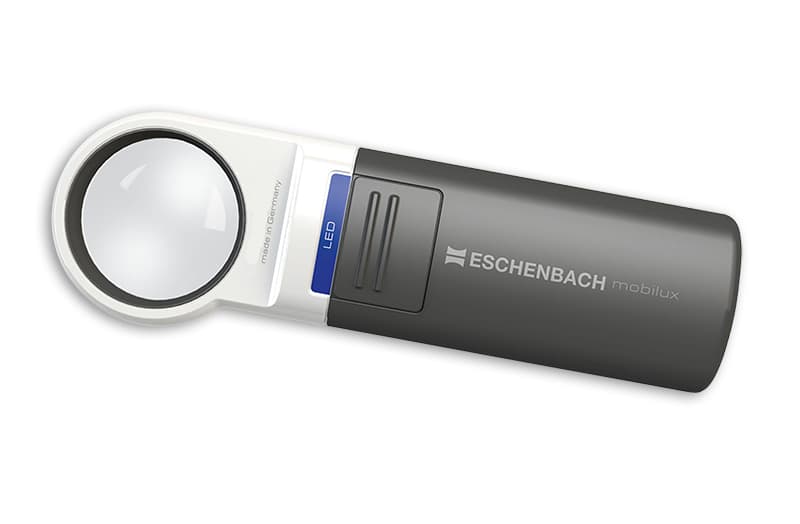
10 X Lit Glass Magnifier
Portable optical support for reading and daily visual tasks.
Low Vision Aids
Treatment plans are personalized to each patient's visual goals, lifestyle, and daily activities, helping restore confidence and independence.
The consultations are covered by OHIP.
Portable optical support for reading and daily visual tasks.

Electronic near-vision assistance for reading comfort.
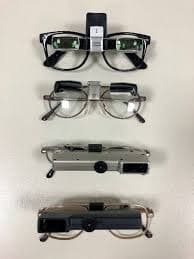
Telescopes for distance vision used for driving programs.
Prism Glasses
Prism glasses are an important tool in vision rehabilitation and can help improve vision and visual function in patients with low vision and neurological visual disorders.
Prism glasses offer a simple, non-invasive treatment option that can improve head posture, comfort, and visual function for many patients.
Clinical Applications
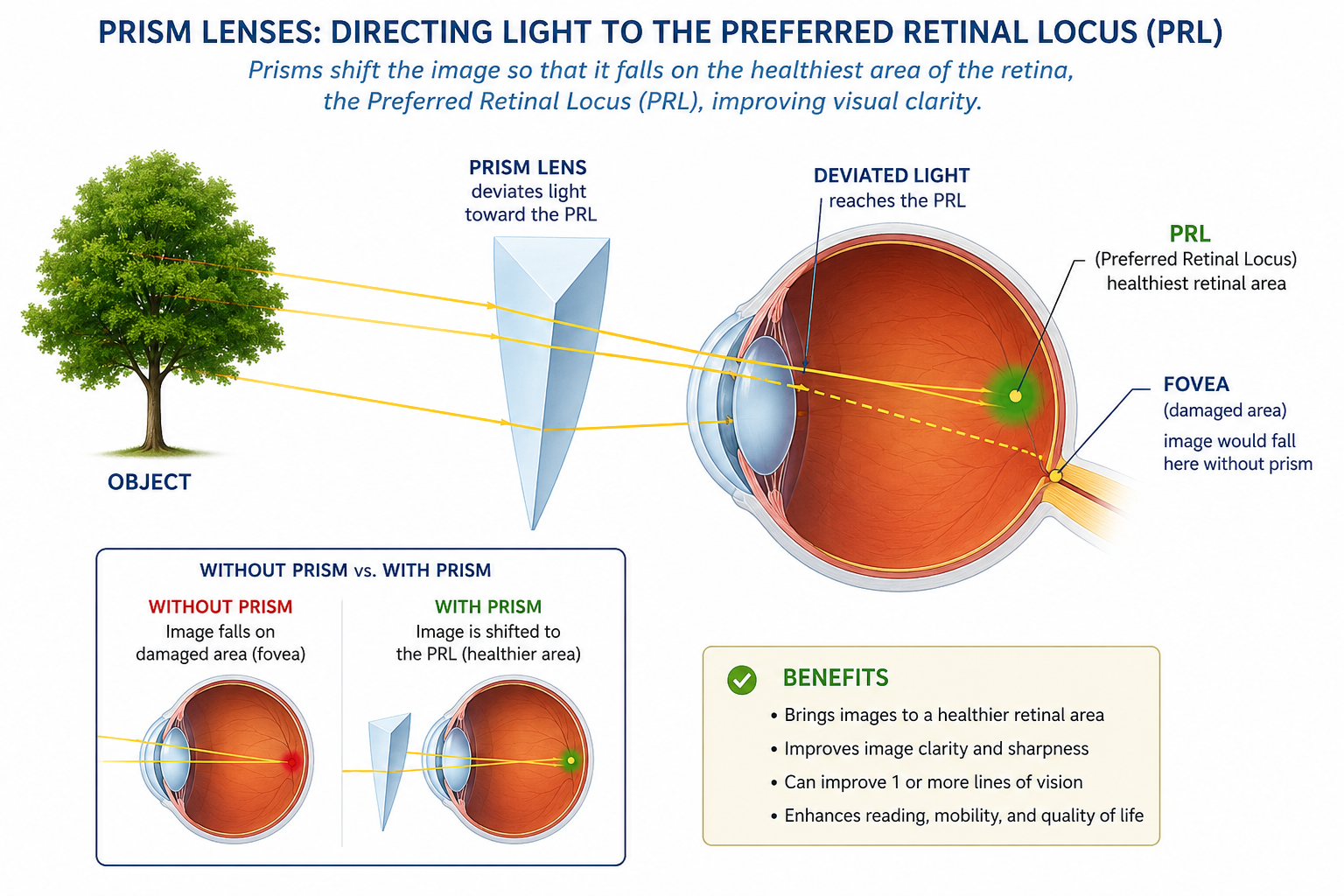
For some patients with low vision, prisms can redirect incoming light toward the Preferred Retinal Locus (PRL), the healthiest area of the retina that the brain naturally adopts when the central retina is damaged. By directing images to this more functional retinal area, prism glasses may improve visual clarity and, in selected patients, can result in an improvement of one or more lines of visual acuity.
Prisms can also benefit patients with homonymous hemianopia, a condition in which half of the visual field is lost in both eyes, most commonly following a stroke or brain injury. Specially prescribed prism glasses shift images from the blind side toward the seeing side, increasing awareness of objects that would otherwise remain outside the patient's field of view.
Dr. Monica Daibert-Nido has demonstrated that low-power prism glasses can improve abnormal head posture in patients with congenital or acquired nystagmus. In a clinical study involving more than 30 patients, low-power prisms significantly reduced compensatory head turns while maintaining excellent cosmetic appearance.
A patient who improved her abnormal head position when using the prism glasses, maintaining it after 2 years of use.
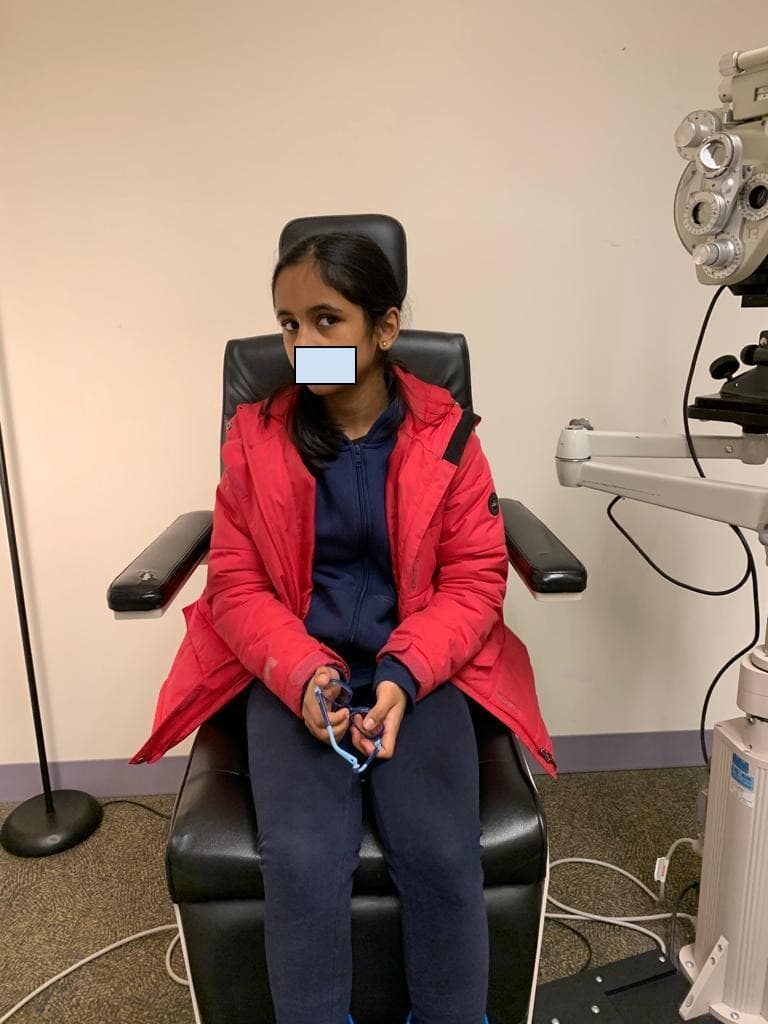
Before wearing the prism glasses, the patient had a 20° right face turn and a 5° right head tilt.
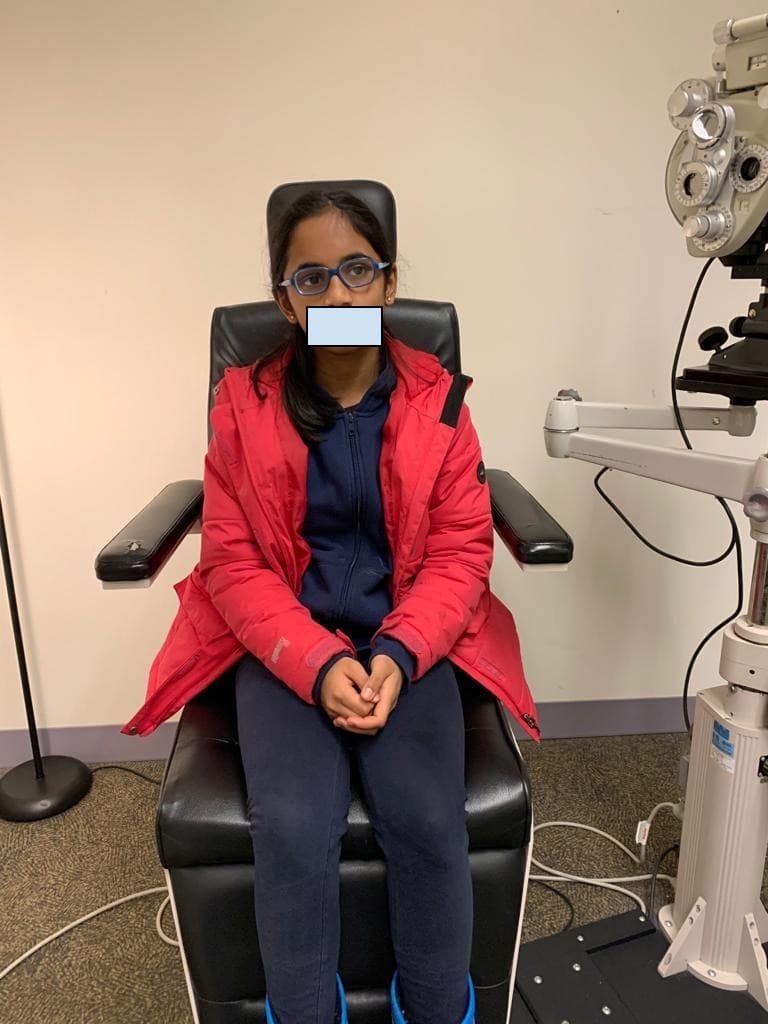
Plano/Plano lenses with 5 prisms Base Out / Base In - 2-year follow-up showing a 5° right head tilt.
Contact Us
Have your physician or optometrist fax us a referral for a comprehensive low vision evaluation.
CONTACT US